

### Blog Post:
Heat pump water heater systems are quickly gaining traction among homeowners searching for the most energy efficient water heater replacement, enticing with hefty energy savings claims, generous incentives, and emerging plug-in models—but are they truly worth the switch for your situation, or will hidden costs, installation challenges, or climate quirks erode the benefit?
Key Takeaways
- Heat pump water heaters can cut water-heating energy use by up to 73% compared to conventional electric tanks (DOE 2024).
- Upfront cost is higher, but federal tax credits and state incentives may cover up to $2,000—drastically improving payback time.
- Real-world performance and installation headaches vary; consider your climate, available space, and hot water needs before committing.
- Quick verdict: Is a heat pump water heater right for you?
- How heat pump water heaters work (simple, practical explanation)
- Efficiency and operating-cost comparison: HPWH vs tankless vs conventional
- Installation cost, incentives and payback realities
- 120-volt (plug-in) HPWHs — what owners report
- Maintenance, reliability and performance issues to expect
- Climate and siting limits — cold-climate performance
- Hidden benefits and policy advantages most guides miss
- Sizing, placement and installer brief checklist
- Quick decision checklist and recommended next steps
- Short FAQ
Quick verdict: Is a heat pump water heater right for you?
For most suburban and urban households—especially families of 3 or more with moderate to high annual hot water use—a heat pump water heater can be the most energy efficient water heater upgrade available, delivering striking savings. According to the Department of Energy, HPWHs can reduce water heating energy use by up to 73%. However, they demand adequate space (about 1,000 ft³, ideally in a mild area like a basement or utility room), consistent access to air, and a willingness to handle a few new quirks in exchange for much lower utility bills, especially when leveraging available rebates and incentives. If your installation site is extremely cold, cramped, or requires extensive electrical upgrades, tankless or a high-efficiency conventional unit could be more practical.
Read more about HPWH efficiency stats.
How heat pump water heaters work (simple, practical explanation)
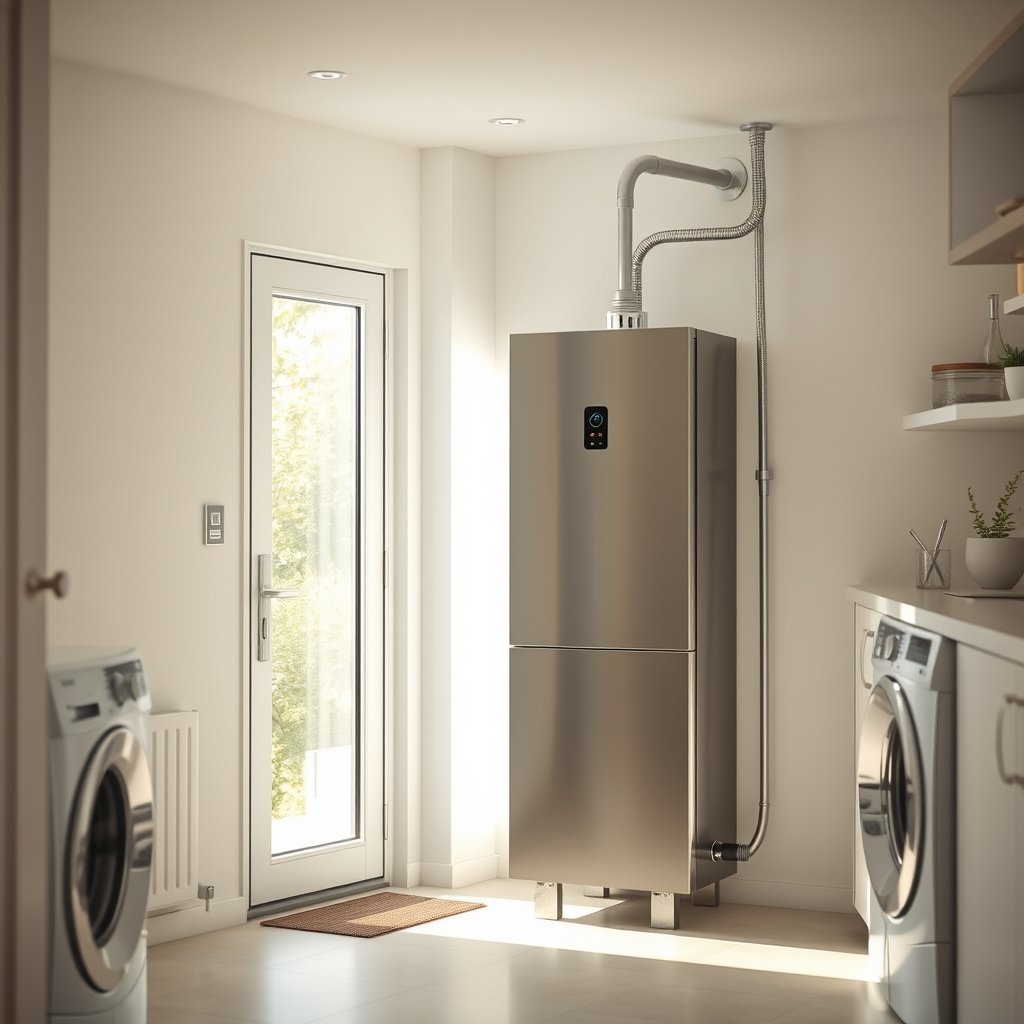
A heat pump water heater works by transferring heat from the surrounding air into the water tank using a refrigeration cycle—like a reverse air conditioner. Unlike a standard electric tank that uses resistive coils (think: giant toaster), the heat pump’s compressor extracts energy from the room, dramatically reducing electricity demand. Most HPWHs have two main operating modes: “heat-pump” mode for maximum efficiency, and “hybrid” or “high-demand” modes that automatically use electric resistance when hot water needs spike. The efficiency number that matters most is the Uniform Energy Factor (UEF). HPWHs score a UEF of 3.0 to 4.1, meaning 3–4 times as much hot water per unit of energy as a conventional electric tank (UEF near 0.9).
Learn more in this Consumer Reports breakdown on water heater efficiency.
Efficiency and operating-cost comparison: HPWH vs tankless vs conventional
Let’s break down the real money: suppose a typical four-person home. A modern heat pump water heater costs about $150 per year to operate. In contrast, a tankless system will run you about $450 per year, while a standard electric tank hovers at $600 per year. That’s a delta of hundreds per year, even before incentives. Tankless water heaters have UEFs of 0.82–0.97—better than old tanks, but rarely match HPWH efficiency. Note that tankless makes more sense for smaller homes, light water users, or where gas is cheap and thick electrical wiring is impractical. If your hot water demand is highly variable, tankless can offer endless hot water—but still lags HPWHs on overall energy use and bill impact.
For a deep-dive on these numbers, check this cost comparison guide or our test article on water heater cost analysis for breakdowns.
| Type | Typical UEF | Annual Operating Cost (4-Person Home) | Notes |
|---|---|---|---|
| Heat Pump Water Heater | 3.0 – 4.1 | $150 | Highest efficiency, up to 73% energy savings; some climate/placement limits |
| Tankless (Gas/Electric) | 0.82 – 0.97 | $450 | Endless hot water; installation may need gas lines or thick wiring |
| Standard Electric Tank | 0.9 | $600 | Low upfront cost, highest bills |
Installation cost, incentives and payback realities
Upfront, a heat pump water heater typically runs from $1,500 to $3,500 installed (before incentives). This is steeper than tank-style or tankless models, in part due to electrical upgrades, potential ducting, and site prep. The pivot: many households are eligible for a 30% federal tax credit (up to $2,000), and numerous state utility rebates—which combined can cover roughly $2,000 of your initial outlay. This slashes payback time, especially when factored against your utility savings. If your panel needs expensive upgrades, or your install site is especially tight, expect the bill to balloon. Always get two or more bids and ask if they include full heat pump water heater installation cost, annual energy use projections, and precise incentive math.
120-volt (plug-in) HPWHs — what owners report
The newer 120v heat pump water heater models are marketed as easy, plug-and-play upgrades—perfect for replacing gas or electric tanks without re-wiring. In practice, owner reviews highlight three key quirks:
- Space and ventilation: These models draw and exhaust significant air. “You’ll need a room of about 1,000 cubic feet or must add ducting,” notes one HPWH user. Small closets can lead to overheating or lost efficiency.
- Condensate handling: A drain line is required, or you’ll be emptying a bucket regularly, and freezing is a risk in cold basements.
- Slower hot water recovery: First-hour recovery is much longer than a gas or tankless model—”my tank takes a while to re-heat in heat pump mode after big family showers,” one owner reports. Choosing a larger tank or switching to hybrid or electric-boost modes can help.
Learn more about these plug-in models and realistic install steps in our detailed practices guide.
Maintenance, reliability and performance issues to expect
Heat pump water heaters are generally reliable, but do need new habits:
- Descaling and flushing: Every 1–2 years, to prevent mineral build-up and preserve hybrid water heater benefits.
- Air filter cleaning: Dust will cut efficiency; wipe or replace filters every few months.
- Condensate drain check: Make sure water is draining, not pooling.
The compressor and control electronics are the main repair points. “Mine worked flawlessly for five years, just need to be diligent about the air filter and cleaning the condensate line,” says another owner from the Plumbing subreddit. Most brands offer 10-year tank warranties. In high-demand periods or cold snaps, your HPWH will switch to “electric only” mode, bringing bills closer to a regular electric tank.
Climate and siting limits — cold-climate performance
Heat pump water heaters are highly efficient in moderate to warm spaces, but their performance degrades notably at temps below 40°F. In cold basements or garages, the unit will rely on its electric resistance backup, raising costs and slashing efficiency. Ducting options include venting to an adjacent finished space (for dehumidification benefits) or directly outside to avoid overcooling. For homes in deep winter zones, compare projected bills carefully, and consider an energy efficient water heater alternative if you cannot meet siting requirements.
Hidden benefits and policy advantages most guides miss
Several fringe perks and financial levers often go unmentioned:
- Dehumidification and modest cooling: The HPWH naturally dries out its room (great for basements), giving a bonus climate benefit during warm months.
- Federal and state incentives: Layer your 30% federal credit (up to $2,000) on top of local rebates to shorten payback. See policy details at A.O. Smith’s summary.
- Climate impact: HPWHs can substantially cut home carbon emissions for decades, especially if grid electricity gets cleaner. Lifecycle emissions are among the best of any major water heater.
A word of caution—when temps drop below 40°F inside your install space, efficiency plummets and heating reverts to standard electrical resistance, letting the advantage slip.
Sizing, placement and installer brief checklist
Select your tank based on household size (50 gallons for up to 3, 65–80 gallons for families of 4–6, or upsize to minimize heat boost frequency). Always ensure a well-ventilated room—about 1,000 cubic feet clear, ideally central to water use. Ducting options include venting to an adjacent finished space (for dehumidification benefits) or directly outside to avoid overcooling. Ask your contractor:
- Is my electrical service sufficient for a HPWH or 120v heat pump water heater?
- How will you manage condensate drainage and freeze risks?
- What are the terms of the warranty, and who provides service?
- Will you provide a written estimate of heat pump water heater installation cost and expected yearly savings?
Practical siting tip: “If you can’t easily meet the 1,000 ft³ ventilation need, insist on ducting,” advises one installer. For more practical home upgrade guidance, visit our article on vetting home electrification bids.
Quick decision checklist and recommended next steps
- Assess your hot water usage: Is your household 3+ people? Do you run back-to-back showers, or stagger use?
- Check your site: Do you have 1,000+ cubic feet in a conditioned space, or ducting options?
- Evaluate your panel: Any recent electrical upgrades? Will you need to run a new circuit? 120v HPWHs can sometimes avoid this but run slower.
- Compare incentives: Use instant calculators from your utility and see federal/state programs for credits.
- Vet two installers: Make sure each includes accurate annual cost, UEF numbers (target: 3.0–4.1 for HPWH; 0.82–0.97 tankless), and every available rebate in writing.
- Consider climate: If you routinely see space temps below 40°F, weigh tankless or efficient conventional models as backup.
For more on how to select, see our post on questioning installer bids.

Short FAQ
Are heat pump water heaters noisy?
They can be slightly louder than standard tanks—think a window AC running in “fan” mode. Most owners find noise acceptable in basements or garages but notice it in small, living-adjacent rooms.
Will my heat pump water heater freeze in a cold basement?
If the install area drops below freezing, condensate and system components can freeze. Always insulate pipes, ensure condensate drains are protected, or add minimal background heat in winter.
How often do I need to descale or flush the tank?
Recommended every 1–2 years for maximum hybrid water heater benefits and system longevity, especially in hard-water areas.
Does a heat pump water heater run out of hot water faster?
If sized correctly, no. Recovery (how fast it heats a full new tank) is slower in heat pump mode than gas or standard electric, but most households find “hybrid” or “boost” modes cover peak demand.
How much can I really expect to save?
Most four-person homes can expect annual operating costs near $150 for a HPWH, versus $450 for tankless or $600 for an electric tank—up to 73% lower bills, per DOE and industry data.